

From Overwhelmed to Influential: A Simple Daily Practice to Strengthen Persuasion
Persuasion is not built in a single video, script, or strategy. It is built through daily awareness and intentional practice. This guide introduces a simple fifteen minute daily habit that helps founders move from feeling overwhelmed by content and messaging to communicating with clarity, confidence, and influence. You will learn how to train your eye to recognize persuasion in the real world, how to analyze what makes messages work, and how to strengthen your own voice through daily repetition. Built for founders who want influence without pressure or burnout, this article shows how persuasion becomes instinct rather than effort through consistent practice.

How Ads Use Ethos, Pathos, and Logos — And What Founders Can Learn
Every successful advertisement is built on more than visuals or clever copy. It is built on persuasion. This guide breaks down how major brands use ethos, pathos, and logos to shape belief, spark emotion, and build trust at scale. You will learn how iconic ads from leading companies apply the Rhetorical Triangle to influence behavior and why these same principles work just as powerfully for founders. Built for modern founders and marketers, this article shows how to turn ads, videos, and campaigns into structured persuasive systems that connect emotionally, clarify value, and establish credibility in seconds.

The Triangle in Action: How I Landed a $40,000 Project Using Rhetoric
This real world case study shows how the Rhetorical Triangle of logos, pathos, and ethos can directly influence high value business outcomes. In this breakdown of a 40000 dollar project win, you will see how trust, emotional connection, and logical clarity worked together in real time to move a client from interest to commitment without aggressive selling. This article reveals how listening establishes credibility, how emotional alignment creates momentum, and how clear structure removes risk. Built for founders, creatives, and consultants, this story demonstrates how persuasion is not theoretical but practical and repeatable in real business scenarios.

How To Use Aristotle’s Appeals in Your Sixty-Second Pitch Video
A sixty second pitch video is one of the most powerful persuasion tools a founder can use, but only when it is structured correctly. This guide breaks down how to use Aristotle’s three appeals of logos, pathos, and ethos inside a tight one minute format to create clarity, emotional connection, and trust in the right order. You will learn how to structure your pitch so your audience understands the problem instantly, feels the emotional weight of it, trusts the person behind the solution, and knows exactly what to do next. Built for modern founders, marketers, and crowdfunding creators, this article shows how to turn short form video into a complete persuasive system that respects human psychology and drives real action.

Why Rhetoric Is the Number One Skill for Founders in a Distrustful Market
In today’s distrustful digital market, products, features, and technology are no longer enough to win attention or belief. This guide explains why rhetoric is the most powerful skill a founder can master in an era of skepticism, short attention spans, and low trust. You will learn how clarity, emotion, and credibility work together through the three appeals of rhetoric to cut through resistance and create real influence. Built for modern founders and crowdfunding creators, this article shows how persuasive communication outperforms tactics, tools, and trends by turning messages into engines of trust, connection, and conversion.

The Ethics of Persuasion: How To Influence Without Manipulating
In a digital world flooded with marketing messages, viral hooks, and AI generated content, the line between persuasion and manipulation has never been more important. This guide explains what ethical persuasion truly means, why it builds stronger trust than pressure based tactics, and how founders can influence responsibly without misleading their audience. You will learn the psychological difference between influence and manipulation, why transparency increases conversion, and how honesty actually strengthens brand loyalty. Built for modern founders and marketers, this article breaks down how to use emotion, proof, and credibility ethically to create lasting belief instead of short term compliance.

The Sophists: What Modern Marketers Can Learn From the First Influencers
Long before modern marketing, advertising, or social media existed, the Sophists were shaping public opinion through the power of persuasive communication. This guide explores who the Sophists were, why they are considered the first true influencers, and what modern founders and marketers can learn from their timeless principles of persuasion. You will discover how language, structure, delivery, emotion, and credibility were used to influence crowds thousands of years ago and why those same principles still drive attention, trust, and action today. This article connects ancient rhetorical mastery to modern video marketing, branding, and crowdfunding, showing how founders can stand out, gain trust quickly, and move audiences through clear, structured, and emotionally intelligent communication.
Ethos: How To Build Trust Fast as a New Founder
Trust is what determines whether a new founder is believed, supported, or ignored. This guide breaks down how to use ethos, the credibility appeal of persuasion, to build trust fast even without massive traction or a long track record. You will learn how people subconsciously evaluate credibility, how trust is formed within seconds, and how to strengthen perceived expertise, integrity, and goodwill through video and storytelling. Built for early stage and crowdfunding founders, this article shows how to use authenticity, transparency, proof, and consistent messaging to reduce perceived risk and increase belief. You will also learn what weakens credibility, why ethos is the foundation of all persuasion, and how to show trust visually and emotionally before logic or emotion ever has a chance to work.

Pathos: How To Make Your Audience Feel The Problem You Solve
Emotion is what turns understanding into action for founders who are asking backers to believe in something that does not yet exist. This guide breaks down how to use pathos, the emotional appeal of persuasion, to help your audience feel the problem you solve and connect with your mission on a human level. You will learn how to evoke real emotional recognition, reflect your audience’s inner struggles, and create an emotional shift that makes your solution feel necessary and urgent. Built specifically for crowdfunding and early stage founders, this article shows how emotion drives memory, trust, and belief. You will also learn the difference between authentic emotion and manipulation, how founder storytelling strengthens connection, and why emotional resonance is often the deciding factor between a viewer who scrolls past and one who becomes a supporter.

How To Use Logos To Make Backers Say: “This Makes Sense.”
Clarity is what turns curiosity into confidence and confidence into action for founders who are building trust with backers for the first time. This guide explains how to use logos, the logical appeal of persuasion, to help your audience instantly understand your product, your reasoning, and why your solution truly makes sense. You will learn how to clearly communicate the problem, explain why it matters, and walk backers through a simple, believable solution they can trust. Designed specifically for crowdfunding founders, this article shows how logical structure increases conversions, reduces hesitation, and strengthens belief in your idea. You will also discover common mistakes that weaken clarity, how to use simple proof to build trust, and why messages that make sense are the ones backers remember, repeat, and support with their money. If your campaign video is not converting, this breakdown will show you how to sharpen your logic and make your value impossible to misunderstand.

What Is The Rhetorical Triangle: A Founder’s Guide to Persuasive Video
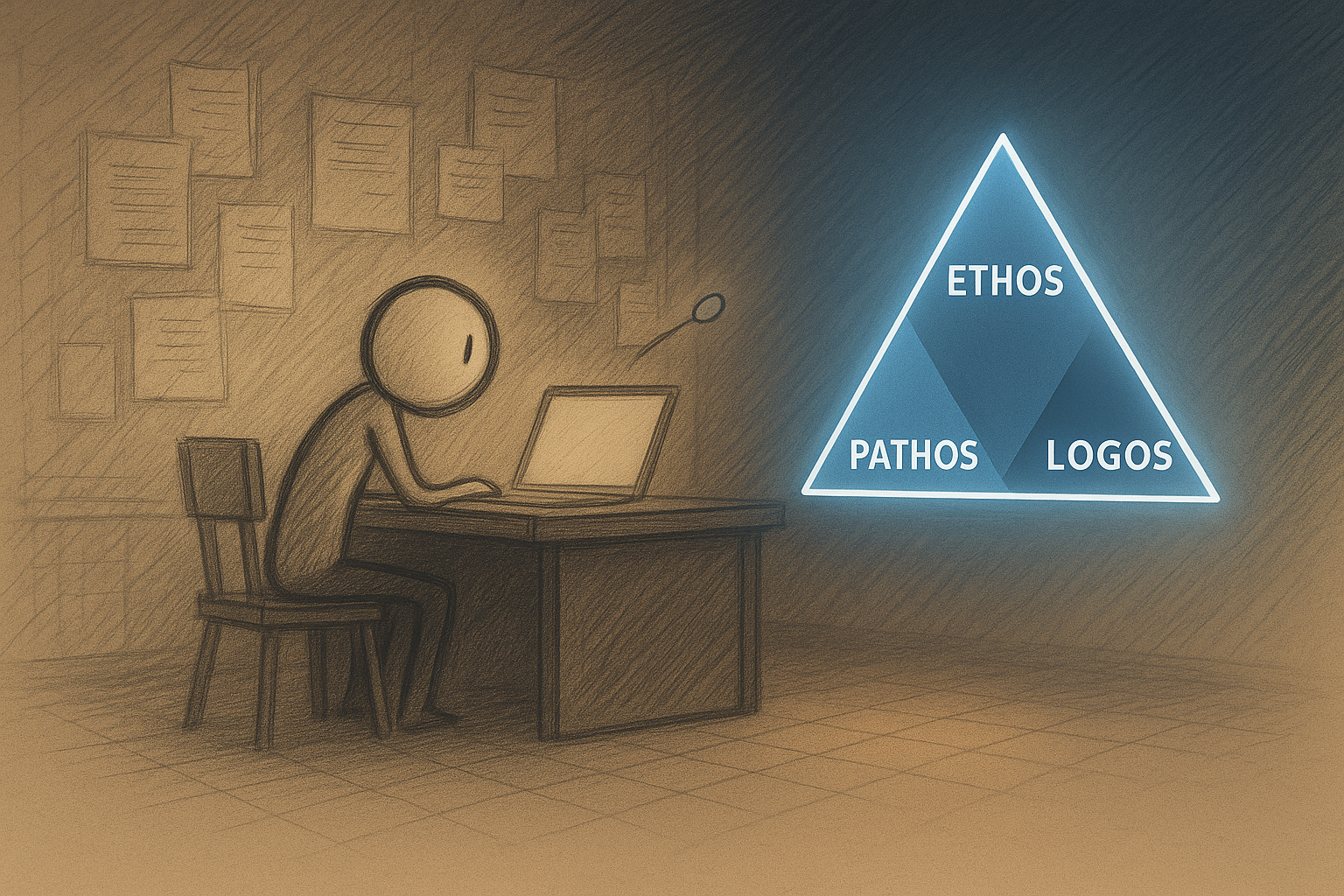
The Rhetorical Triangle is one of the most enduring persuasion frameworks in human history, shaping how ideas, movements, and decisions have been communicated for over two thousand years. This guide explains why logos, pathos, and ethos remain the most powerful tools for founders who need to break through noise, skepticism, and short attention spans. You will learn how clarity creates understanding, emotion creates connection, and trust creates belief. Built for modern founders and crowdfunding creators, this article shows how the Rhetorical Triangle turns scattered messaging into a complete system of persuasion that helps audiences understand, feel, and trust your message.
The Real Reason Your Video Isn’t Converting (It’s Not Your Camera)
Most founders like you believe your crowdfunding video is not converting because you need better gear, sharper edits, or new AI tools. The real reason is much simpler. Your video is not built to persuade. For early stage founders launching a product, persuasion is what turns viewers into backers. It always has been. Long before cameras existed, persuasion decided who was trusted, who was believed, and who received support.
If your audience does not clearly understand your product, emotionally connect to the problem you solve, and trust you as the founder, no amount of production polish will drive results. This is why so many Kickstarter and product launch videos look great but fail to raise money. Conversion is not created by equipment. It is created by message structure.
In this first blog, you will learn why most founders misdiagnose their video problems, how the Rhetorical Triangle drives real conversion, and what truly makes a crowdfunding video persuasive. This is where you stop chasing tools and start building influence that moves people to act.